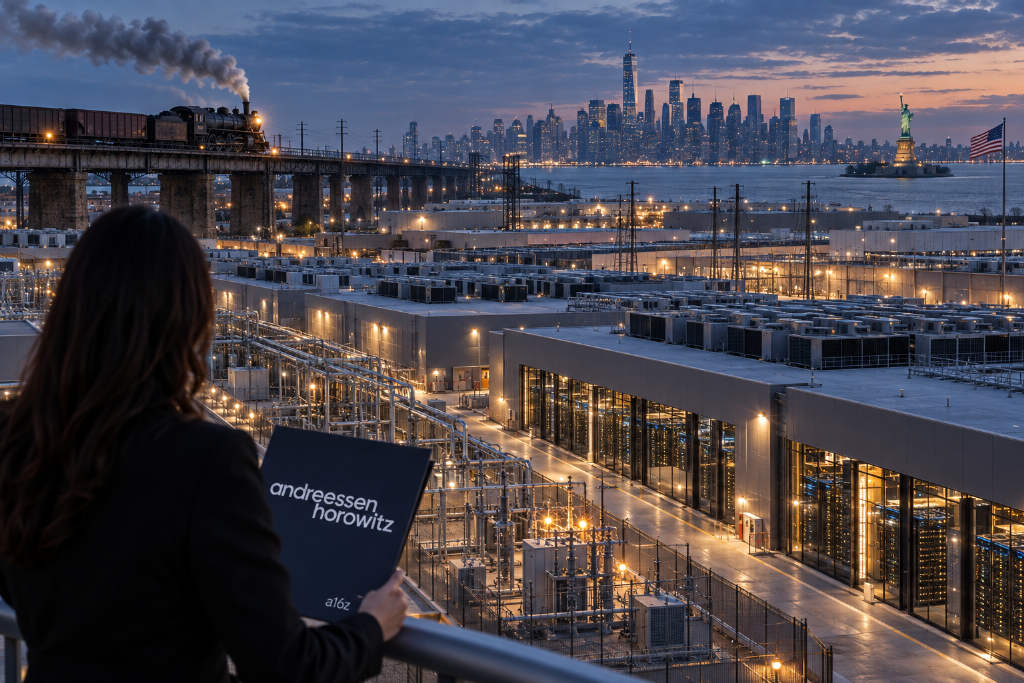
a16z2026-10-01 10:14:28a16z says AI infrastructure buildout has surpassed the railroad era in share of U.S. GDPAndreessen Horowitz said in its second annual State of the Market report, released on Sept. 30, that the current AI infrastructure buildout now represents a larger share of U.S. GDP than the 19th-century railroad boom, a comparison often used by markets to frame the scale of the cycle. The firm said capital spending by the four largest U.S. cloud providers and other hyperscalers reached about $416 billion in 2025, could rise to roughly $780 billion in 2026, and may exceed $1 trillion a year starting in 2027. According to the report, technology companies accounted for about 76% of S&P 500 earnings growth in 2026, while high-tech equipment, software and R&D together made up about 55% of total U.S. capital expenditure. a16z also pushed back on the idea that GPUs quickly lose value after three to four years, saying Nvidia’s A100 chips installed one or two years ago still perform well even as demand for the newer B200 remains strong. The report added that AI adoption is broad but still shallow: about 69% of S&P 500 companies have launched AI applications, nearly 30% reported measurable benefits, yet only about 2% consistently track outcomes.40
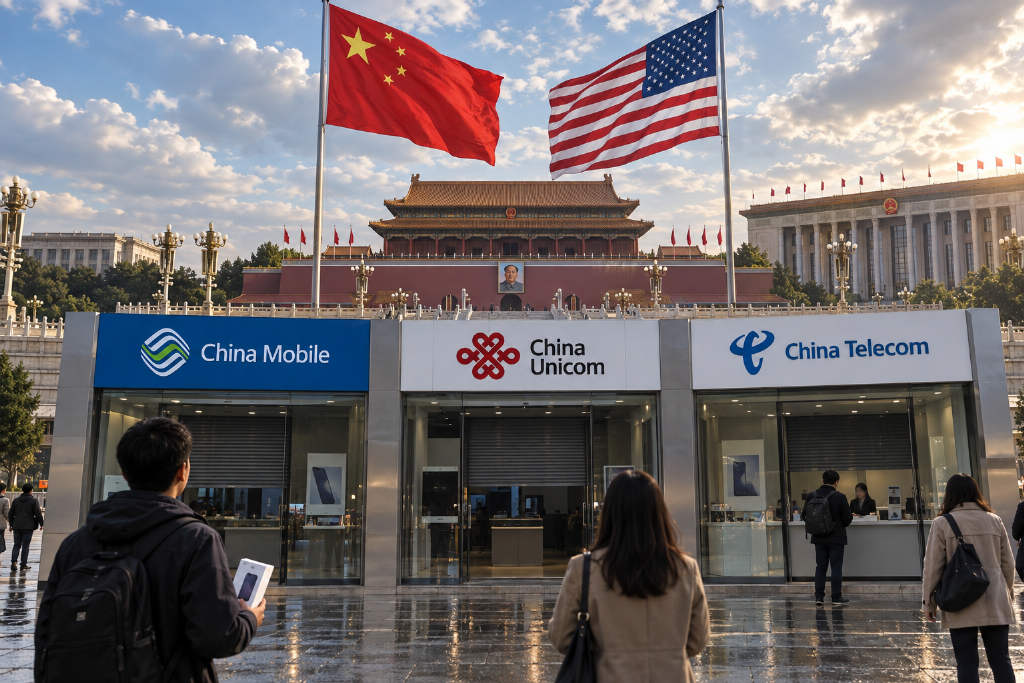
China-US rela2026-09-27 23:32:13China-U.S. talks yield eight-point consensus as major Chinese carriers halt “zero-down” phone plansChina and the United States reached an eight-point consensus during President Xi Jinping’s state visit to the U.S. from Sept. 23 to 25, according to CCTV News. The outcomes covered a “constructive strategic stability relationship” based on respect, fairness and equality, mutual support for upcoming APEC and G20 meetings, coordination on Iran’s non-nuclear commitment and international waterways, progress in bilateral trade talks including a reciprocal tariff-cut arrangement worth $30 billion, visible results in counternarcotics cooperation, and a new AI dialogue mechanism with the next round set for November. The U.S. side also welcomed the arrival of a pair of giant pandas on loan from China to Zoo Atlanta. In China’s corporate sector, customer service channels at China Mobile, China Telecom and China Unicom said installment-based handset programs tied to so-called “free phone” offers have been suspended. Changan Automobile moved ahead with the integration of Avatr and Deepal by creating an AD Synergy Development Department, while NIO said its Silk Road battery-swap route is now fully connected after its 4,125th swap station went live. Overseas, Goldman Sachs estimated that six major U.S. tech companies would need to generate about $1.42 trillion in revenue from 2028 to 2030 to achieve a 15% annualized ROIC on AI compute investments. Meta, OpenAI, Apple, General Motors, SpaceX, Oura, Anthropic and the Trump administration also featured in a fresh round of legal, product and policy developments.310
AI debt risk2026-08-09 09:25:57CICC says AI debt risk remains contained as major cloud firms shift toward external fundingA research note from China International Capital Corporation, or CICC, argues that debt linked to the US artificial intelligence buildout remains manageable even as major cloud providers ramp up borrowing to finance heavier capital spending. Using Hyman Minsky’s financial instability hypothesis, the report examines whether Microsoft, Google, Meta, Amazon and Oracle are moving from self-funded expansion toward debt structures that rely more heavily on outside financing. CICC says the five cloud companies have accelerated bond issuance, with combined issuance in the first half of 2026 reaching about $170 billion, or 1.5 times the full-year total for 2025. Capital expenditure has also climbed to 97.4% of operating cash flow across the group. Even so, the firms still show solid debt-servicing capacity. Cash-flow interest coverage ratios remain above 1 for all five, while debt service ratios are below 1, indicating that operating cash flow can still cover both principal and interest. Microsoft, Google, Meta and Amazon continue to rank well versus the broader market, while Oracle looks weaker. The report says the main change is not excessive debt size but a migration in financing structure. Google and Amazon are showing early signs of moving from hedge finance toward speculative finance, while Oracle appears more financially fragile because of negative free cash flow and negative net cash. At the macro level, CICC says low leverage in the US household and corporate sectors, strong bank capital, and the bond-market-led nature of AI funding all reduce the odds that current AI debt will turn into a broader systemic crisis.1880
US tech2026-07-27 08:25:21US tech companies cut nearly 140,000 jobs in seven months as $725 billion shifts to AI data centersUS tech companies have eliminated nearly 140,000 jobs in the first seven months of 2026, according to a July 27 analysis by the Financial Times, with the sector accounting for more than one-third of all layoffs nationwide. At the same time, hyperscale technology groups are channeling about $725 billion into AI data center construction, linking workforce reductions with one of the biggest capital spending cycles in the industry. The report said Amazon, Oracle, Meta and Microsoft together cut about 50,000 roles. Microsoft announced roughly 4,800 layoffs in early July, mostly in Xbox, while Oracle said in June that it had reduced headcount by 21,000 over the past year. Reuters reported Oracle tied the cuts in its SEC filing to faster AI adoption and a need to reshape its workforce. Other firms have made similar moves. Monday.com told the SEC it would cut about 20% of staff, or more than 600 employees, as part of a restructuring plan tied to an AI-driven growth strategy. GitLab cut about 350 workers in June, more than 14% of its staff, and withdrew from 22 countries to focus resources on AI workloads. The Financial Times said many displaced workers are not leaving tech altogether. Some are moving into AI model training, data labeling and MLOps jobs, while companies such as Anthropic and OpenAI continue to hire.1930
Google2026-07-22 23:00:14Google Backs Anthropic’s $5 Billion Texas AI Data Center ProjectGoogle is expected to help finance Anthropic’s Texas data center campus, whose first phase could exceed $5 billion and deliver 500 megawatts by late 2026.450
Goldman Sachs2026-07-11 06:32:13Goldman Sachs sees IBM as the relative winner in IT services, with EPAM facing heavier pressureGoldman Sachs said IBM stands out as the relative beneficiary in its July 10 preview of the Americas technology IT services group for 2Q26, while warning that companies with greater exposure to discretionary spending, including EPAM, face a tougher setup. The report covered IBM, Cognizant, EPAM, Globant, and TaskUs. The bank’s central view is that second-quarter results should be broadly in line with expectations, but macro uncertainty that began affecting client decision-making in April and May is now tightening the range of forward guidance. Goldman expects companies across the group to trim the top end of their guidance ranges and anchor investor expectations closer to the midpoint. IBM was the only stock in the group to receive a Buy rating from Goldman, with a $335 price target. The firm pointed to resilience in IBM’s software business and demand tied to enterprise AI. Goldman forecast IBM’s second-quarter software revenue at $8.16 billion and full-year software revenue at $33.2 billion, with total 2026 revenue at $71.3 billion and free cash flow guidance around $16 billion. By contrast, Goldman kept a Neutral rating on EPAM and said its concentration in application implementation and consulting leaves it more exposed to weaker discretionary budgets. The bank expects EPAM to narrow its full-year organic growth guidance to 2.5%-4.0% from 2.5%-5.0%.420